Investigation

The campaign to derail AI regulation — without talking about AI

Inside the super PAC using crypto's playbook to fight AI regulation.

By

Elizabeth Cox

-

Feb 20, 2026

No headings found

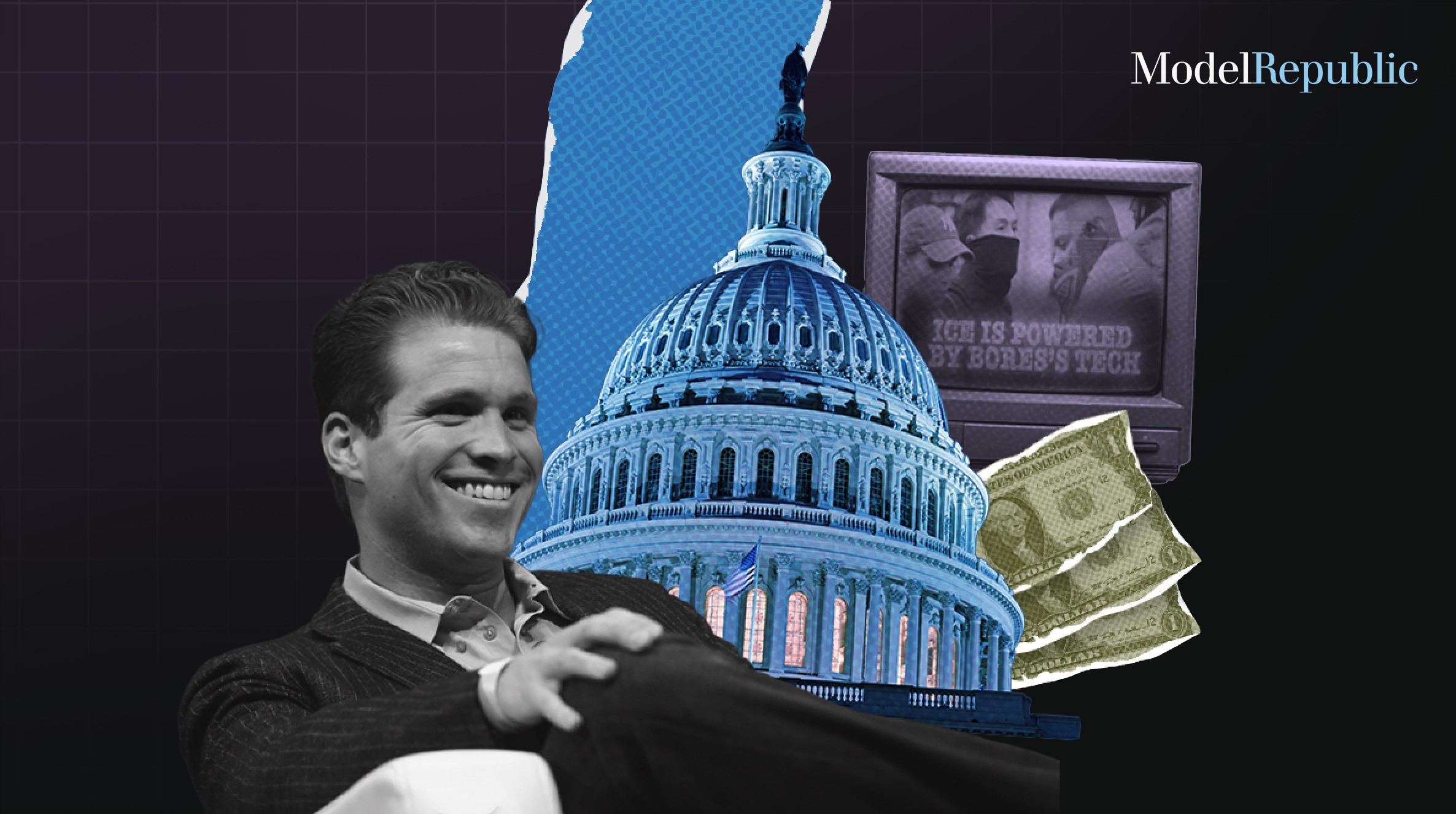
In January, a series of ads accused New York State Assembly Member Alex Bores of hypocrisy for taking an anti-ICE stance in his congressional campaign. The ads claimed he “made hundreds of thousands of dollars building and selling the tech for ICE, enabling ICE and powering their deportations,” referring to projects he ostensibly worked on as an employee of Palantir before he went into politics. 
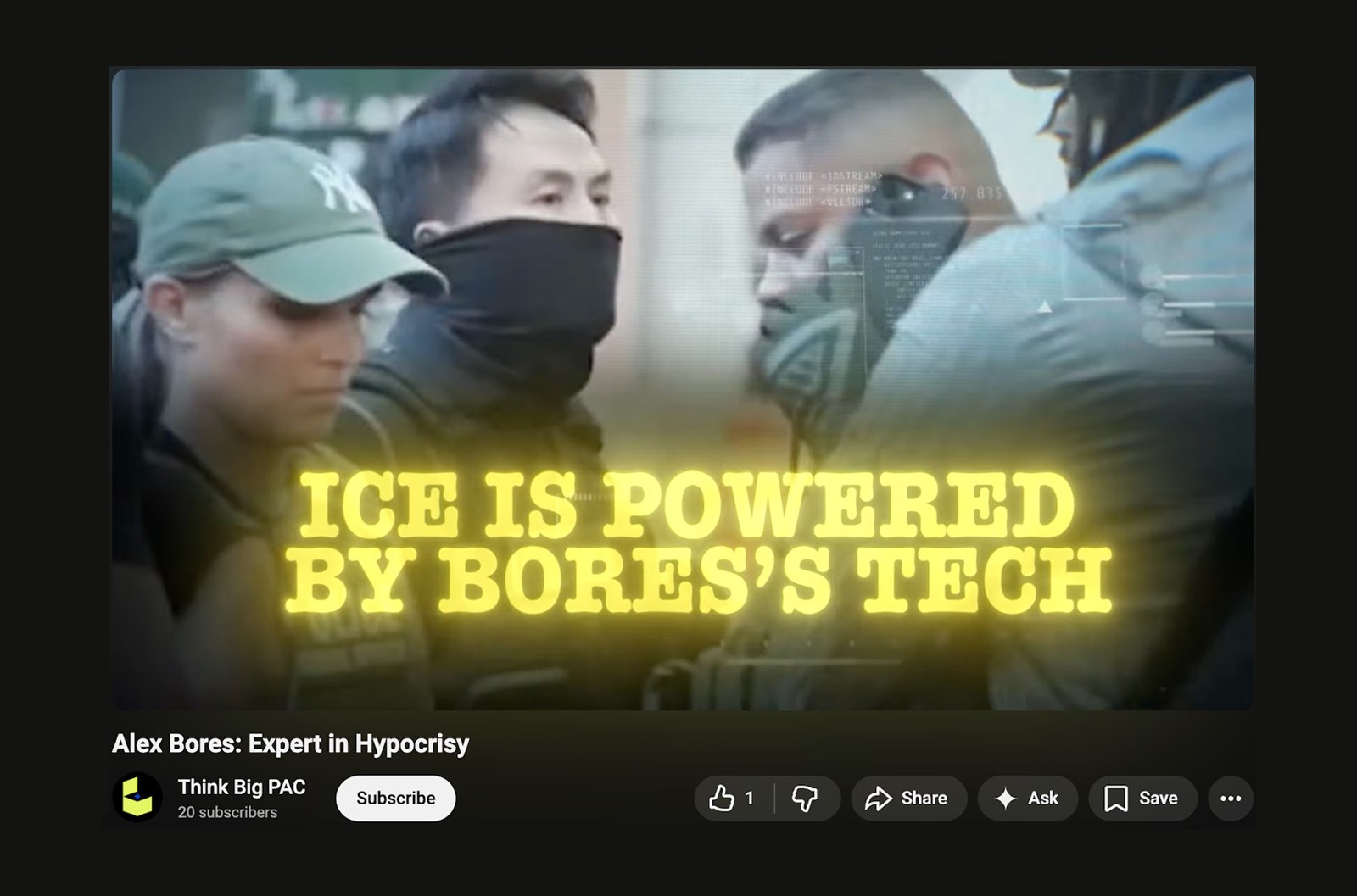
According to Bores, as well as his former Palantir coworkers who spoke to Fast Company, this isn’t true. His campaign went as far as to file a cease-and-desist letter demanding a stop to the ads. 

Behind these ads was Leading The Future, a political action committee (PAC) established to fight budding efforts to regulate the AI industry. One of Leading The Future’s funders is Joe Lonsdale, a co-founder of Palantir — yes, speaking of hypocrisy, that’s the same company the PAC featured in its attack ad against Bores. Another ad in the campaign leans on the connection even more heavily, saying “Bores’s campaign is being funded by Palantir employees. Yeah, the company powering ICE.” 

Lonsdale was quick to point out that his donations weren’t used for the ad campaign attacking Bores. Regardless, it’s clear to outside observers that Leading The Future’s problem with Bores isn’t his past work at Palantir, but rather that he championed the Responsible AI Safety and Education (RAISE) Act in New York.

Leading The Future has received more than $100 million in funding from tech leaders who oppose AI regulation. It’s a super PAC, which means it can raise unlimited funds to influence elections and legislation as long as it doesn’t fund or work with candidates directly. Media campaigns supporting or attacking candidates are in bounds, and are one of the primary tools super PACs use to advance their agendas. 

These ads often make no mention of the issues the people funding them actually care about. Instead, across industries and interest groups, attack ads usually target a candidate's largest vulnerability or exaggerate the significance of minor missteps. Still, it’s relatively unusual for a candidate to make a claim of defamation as Bores has about the ICE ads, which suggests these ads might have crossed the line from exaggeration into outright falsification. 

It’s not surprising that the opponents of AI regulation are grasping at straws. Their position runs counter to public sentiment, which overwhelmingly favors more regulation of the AI industry, not less. The people behind Leading The Future claim to support a uniform federal regulatory framework for artificial intelligence. Taken at face value, this makes a lot of sense: there should be a rulebook for AI, and that rulebook should apply across the entire country. In practice, they seem primarily focused on achieving a light-touch, industry-friendly regulatory environment that includes a near-total ban on state-level lawmaking around AI. 

The largest donors to Leading The Future are OpenAI President and co-founder Greg Brockman, his wife Anna Brockman, and the venture capital firm a16z, which has invested in OpenAI. In 2024, Marc Andreessen and Ben Horowitz, the founders of a16z, co-authored The Little Tech Agenda, which frames their policy objectives as an attempt to protect the interests of startups. In practice, their political spending seems mostly focused on protecting the interests of their largest portfolio companies, like OpenAI and SpaceX. 

The Little Tech Agenda posits that regulation is too burdensome for the small tech companies that push the boundaries of innovation. This may well be true in many cases, but it’s not particularly relevant to the state-level AI laws Horowitz, Andreessen, and their allies oppose. The most significant of these laws, including the RAISE Act Bores supported, only impose requirements on frontier developers with gross annual revenues of over $500 million. Even for companies that qualify, the regulations are fairly minimal: they must set their own safety plans, which they can later change as needed. 

To advance their policy agenda, the opponents of AI regulation are refining tactics the crypto industry used a few years ago. Leading The Future was modeled after the crypto industry super PAC Fairshake and is funded by many of the same people. A16z has contributed tens of millions of dollars to Fairshake, which was responsible for unprecedented corporate political spending and attacked candidates who supported tighter regulation of the crypto industry. 

Like Leading The Future, Fairshake made use of misleading messaging. For example, the PAC spent approximately $10 million on an ad campaign targeting Rep. Katie Porter (D-CA). Rather than arguing against her stance on crypto, the ads criticized her for accepting corporate campaign donations, some of which were less than $1,000. 

The link between Fairshake and Leading The Future goes beyond its funders. Josh Vlasto, one of two people tapped to run Leading The Future, is also a Fairshake advisor and spokesperson. The other, Zac Moffatt, is CEO of the Republican firm Targeted Victory. As part of an effort to bolster Meta’s reputation, Targeted Victory attempted to turn the public against TikTok with a campaign that included false rumors of a “Slap a Teacher” TikTok challenge. As absurd as the “challenge” sounds, this complete fabrication illustrates the firm’s willingness to cross the line in an arena where a lot of questionable messaging is tolerated. 

Ben Horowitz, Marc Andreessen, Sam Altman, and Greg Brockman have all made large donations to President Trump’s inaugural fund or super PAC. Whether the donations come from individual executives or the companies themselves, they function to advance the companies’ interests. So far, President Trump has been receptive to the AI industry’s position, signing an executive order intended to block state laws regulating AI by directing the attorney general to challenge those laws in federal court. The executive order has divided the members of the president’s own party, and Congress has twice shut down a measure that would block state laws regulating AI. In light of this, it makes sense that the opponents of regulation are increasingly interested in spending on congressional campaigns. 

Leading The Future is also working to influence the public’s views on AI directly. An organization it funds recently released an ad claiming the notion that AI will eliminate white-collar jobs is a myth spread by anti-industry “doomers.” Meanwhile, one of Leading The Future’s largest donors is an OpenAI executive, and OpenAI’s stated goal is to build AI that can automate most labor. Sam Altman has said he expects most white-collar work to be automated in the coming decades, and recently made headlines for saying he’d like to replace himself with an AI CEO.

Counter-efforts have started to emerge from those who favor AI regulation. Former Reps. Brad Carson (D-OK) and Chris Stewart (R-UT) have founded Public First Action, a super PAC and 501(c)(4) intended to support candidates who favor AI regulation. Public First Action aims to raise $50 million, including $20 million already committed from Anthropic. A number of employees of frontier AI companies have also contributed hundreds of thousands of dollars so far to a new PAC supporting Alex Bores. These efforts still have a ways to go to catch up with the deregulatory camp, where Leading The Future alone has already raised $125 million. 

The AI industry’s political spending is just getting started. It may outpace the crypto industry’s unprecedented outlay, which accounted for almost half of the corporate election spending across all industries in 2024, and so far it’s weighted heavily toward opposing regulation. This spending is warranted given what’s at stake, but the message the public is receiving as a result of the spending is not about AI regulation at all. We should be hearing about the trade-offs of different types and degrees of regulation. Instead, we’re getting a fragmented story of, among other things, candidates’ behavior completely unrelated to AI and the importance of supporting small startups, peddled by the executives and investors of some of the most well-resourced tech companies in the world. If we take them at their word that AI is the most important technology ever created, its regulation merits informed, honest discourse.

In January, a series of ads accused New York State Assembly Member Alex Bores of hypocrisy for taking an anti-ICE stance in his congressional campaign. The ads claimed he “made hundreds of thousands of dollars building and selling the tech for ICE, enabling ICE and powering their deportations,” referring to projects he ostensibly worked on as an employee of Palantir before he went into politics. 

According to Bores, as well as his former Palantir coworkers who spoke to Fast Company, this isn’t true. His campaign went as far as to file a cease-and-desist letter demanding a stop to the ads. 

Behind these ads was Leading The Future, a political action committee (PAC) established to fight budding efforts to regulate the AI industry. One of Leading The Future’s funders is Joe Lonsdale, a co-founder of Palantir — yes, speaking of hypocrisy, that’s the same company the PAC featured in its attack ad against Bores. Another ad in the campaign leans on the connection even more heavily, saying “Bores’s campaign is being funded by Palantir employees. Yeah, the company powering ICE.” 

Lonsdale was quick to point out that his donations weren’t used for the ad campaign attacking Bores. Regardless, it’s clear to outside observers that Leading The Future’s problem with Bores isn’t his past work at Palantir, but rather that he championed the Responsible AI Safety and Education (RAISE) Act in New York.

Leading The Future has received more than $100 million in funding from tech leaders who oppose AI regulation. It’s a super PAC, which means it can raise unlimited funds to influence elections and legislation as long as it doesn’t fund or work with candidates directly. Media campaigns supporting or attacking candidates are in bounds, and are one of the primary tools super PACs use to advance their agendas. 

These ads often make no mention of the issues the people funding them actually care about. Instead, across industries and interest groups, attack ads usually target a candidate's largest vulnerability or exaggerate the significance of minor missteps. Still, it’s relatively unusual for a candidate to make a claim of defamation as Bores has about the ICE ads, which suggests these ads might have crossed the line from exaggeration into outright falsification. 

It’s not surprising that the opponents of AI regulation are grasping at straws. Their position runs counter to public sentiment, which overwhelmingly favors more regulation of the AI industry, not less. The people behind Leading The Future claim to support a uniform federal regulatory framework for artificial intelligence. Taken at face value, this makes a lot of sense: there should be a rulebook for AI, and that rulebook should apply across the entire country. In practice, they seem primarily focused on achieving a light-touch, industry-friendly regulatory environment that includes a near-total ban on state-level lawmaking around AI. 

The largest donors to Leading The Future are OpenAI President and co-founder Greg Brockman, his wife Anna Brockman, and the venture capital firm a16z, which has invested in OpenAI. In 2024, Marc Andreessen and Ben Horowitz, the founders of a16z, co-authored The Little Tech Agenda, which frames their policy objectives as an attempt to protect the interests of startups. In practice, their political spending seems mostly focused on protecting the interests of their largest portfolio companies, like OpenAI and SpaceX. 

The Little Tech Agenda posits that regulation is too burdensome for the small tech companies that push the boundaries of innovation. This may well be true in many cases, but it’s not particularly relevant to the state-level AI laws Horowitz, Andreessen, and their allies oppose. The most significant of these laws, including the RAISE Act Bores supported, only impose requirements on frontier developers with gross annual revenues of over $500 million. Even for companies that qualify, the regulations are fairly minimal: they must set their own safety plans, which they can later change as needed. 

To advance their policy agenda, the opponents of AI regulation are refining tactics the crypto industry used a few years ago. Leading The Future was modeled after the crypto industry super PAC Fairshake and is funded by many of the same people. A16z has contributed tens of millions of dollars to Fairshake, which was responsible for unprecedented corporate political spending and attacked candidates who supported tighter regulation of the crypto industry. 

Like Leading The Future, Fairshake made use of misleading messaging. For example, the PAC spent approximately $10 million on an ad campaign targeting Rep. Katie Porter (D-CA). Rather than arguing against her stance on crypto, the ads criticized her for accepting corporate campaign donations, some of which were less than $1,000. 

The link between Fairshake and Leading The Future goes beyond its funders. Josh Vlasto, one of two people tapped to run Leading The Future, is also a Fairshake advisor and spokesperson. The other, Zac Moffatt, is CEO of the Republican firm Targeted Victory. As part of an effort to bolster Meta’s reputation, Targeted Victory attempted to turn the public against TikTok with a campaign that included false rumors of a “Slap a Teacher” TikTok challenge. As absurd as the “challenge” sounds, this complete fabrication illustrates the firm’s willingness to cross the line in an arena where a lot of questionable messaging is tolerated. 

Ben Horowitz, Marc Andreessen, Sam Altman, and Greg Brockman have all made large donations to President Trump’s inaugural fund or super PAC. Whether the donations come from individual executives or the companies themselves, they function to advance the companies’ interests. So far, President Trump has been receptive to the AI industry’s position, signing an executive order intended to block state laws regulating AI by directing the attorney general to challenge those laws in federal court. The executive order has divided the members of the president’s own party, and Congress has twice shut down a measure that would block state laws regulating AI. In light of this, it makes sense that the opponents of regulation are increasingly interested in spending on congressional campaigns. 

Leading The Future is also working to influence the public’s views on AI directly. An organization it funds recently released an ad claiming the notion that AI will eliminate white-collar jobs is a myth spread by anti-industry “doomers.” Meanwhile, one of Leading The Future’s largest donors is an OpenAI executive, and OpenAI’s stated goal is to build AI that can automate most labor. Sam Altman has said he expects most white-collar work to be automated in the coming decades, and recently made headlines for saying he’d like to replace himself with an AI CEO.

Counter-efforts have started to emerge from those who favor AI regulation. Former Reps. Brad Carson (D-OK) and Chris Stewart (R-UT) have founded Public First Action, a super PAC and 501(c)(4) intended to support candidates who favor AI regulation. Public First Action aims to raise $50 million, including $20 million already committed from Anthropic. A number of employees of frontier AI companies have also contributed hundreds of thousands of dollars so far to a new PAC supporting Alex Bores. These efforts still have a ways to go to catch up with the deregulatory camp, where Leading The Future alone has already raised $125 million. 

The AI industry’s political spending is just getting started. It may outpace the crypto industry’s unprecedented outlay, which accounted for almost half of the corporate election spending across all industries in 2024, and so far it’s weighted heavily toward opposing regulation. This spending is warranted given what’s at stake, but the message the public is receiving as a result of the spending is not about AI regulation at all. We should be hearing about the trade-offs of different types and degrees of regulation. Instead, we’re getting a fragmented story of, among other things, candidates’ behavior completely unrelated to AI and the importance of supporting small startups, peddled by the executives and investors of some of the most well-resourced tech companies in the world. If we take them at their word that AI is the most important technology ever created, its regulation merits informed, honest discourse.

Power & Policy

Deeply researched analysis of the AI industry, policy moves, and the forces shaping the rules of artificial intelligence — delivered to your email.

Power & Policy

Deeply researched analysis of the AI industry, policy moves, and the forces shaping the rules of artificial intelligence — delivered to your email.

Power & Policy

Deeply researched analysis of the AI industry, policy moves, and the forces shaping the rules of artificial intelligence — delivered to your email.

Smooth Scroll
This will hide itself!