Is OpenAI’s super PAC paying for an army of Twitter bots to engage with their content?
The firm at the center of OpenAI and a16z’s political operation seems to be spamming social media with pornographic bots, inflating engagement on their clients’ accounts.
Tyler Johnston
·
The anti-regulation super PAC funded by OpenAI and a16z has a popularity problem.
Its policy priorities (which tend toward pro-industry views, including the preemption of state lawmaking on AI) poll very poorly among the American public, who broadly distrust the industry and want to see more regulatory efforts, including at the state level. This unpopularity has left them fighting an uphill battle, with some even arguing that their spending has backfired by helping the candidates they aimed to oppose (who, according to this argument, gain legitimacy among voters once they are seen as adversaries of the industry).
In response to this, it seems that they have turned to astroturfing efforts to create the appearance of public support for their positions. They have paid for tens of millions of views on social media posts, some falsely suggesting a pro-regulation and anti-industry stance and directing users to a sign-up form that adds their name to a list of “grassroots” supporters. They’ve also paid for favorable content from influencers, fake news written by AI journalists, and seemingly spun up a sockpuppet account to attack their critics.
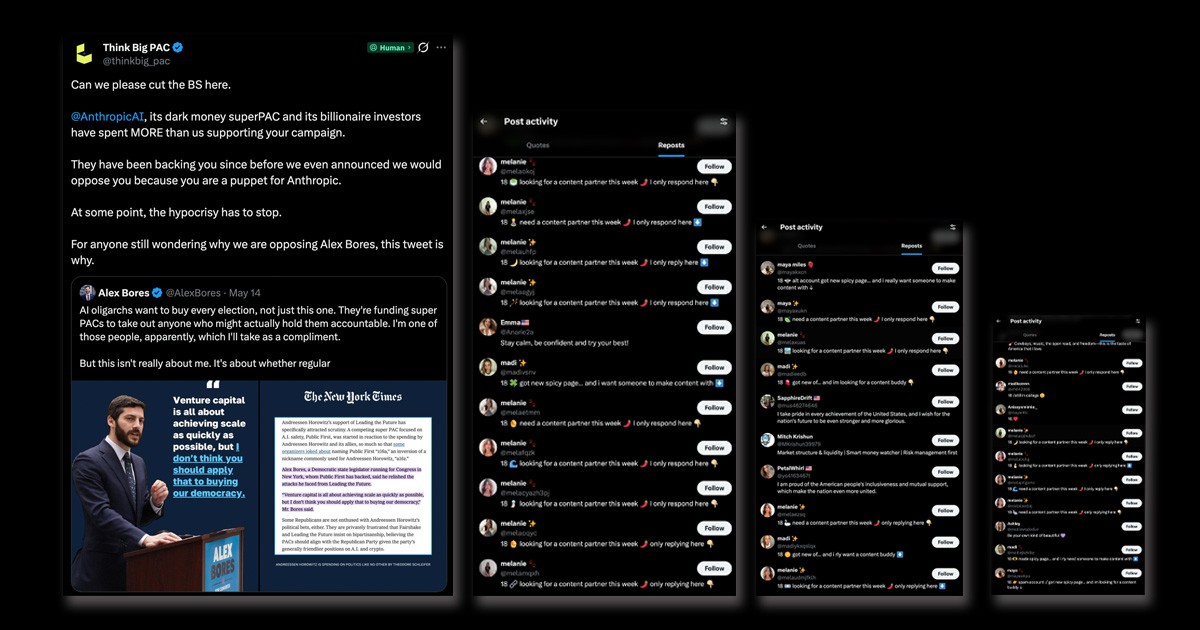
As of this week, it seems their astroturfing has gone further. On Twitter, Nathan Calvin pointed out that a recent post from Think Big PAC, a Leading The Future affiliate, has seen a large share of its engagement come from accounts that appear to be bots.
Think Big PAC’s post was written on Thursday morning. The content attacks Alex Bores, making misleading claims about his support from an opposing super PAC affiliated with the AI company Anthropic. In the first 28 hours, it gathered roughly 1.5 million views and 55 retweets. Of these retweets, 15 appear to have come from Twitter bots claiming to be 18-year-old women promoting their OnlyFans accounts.
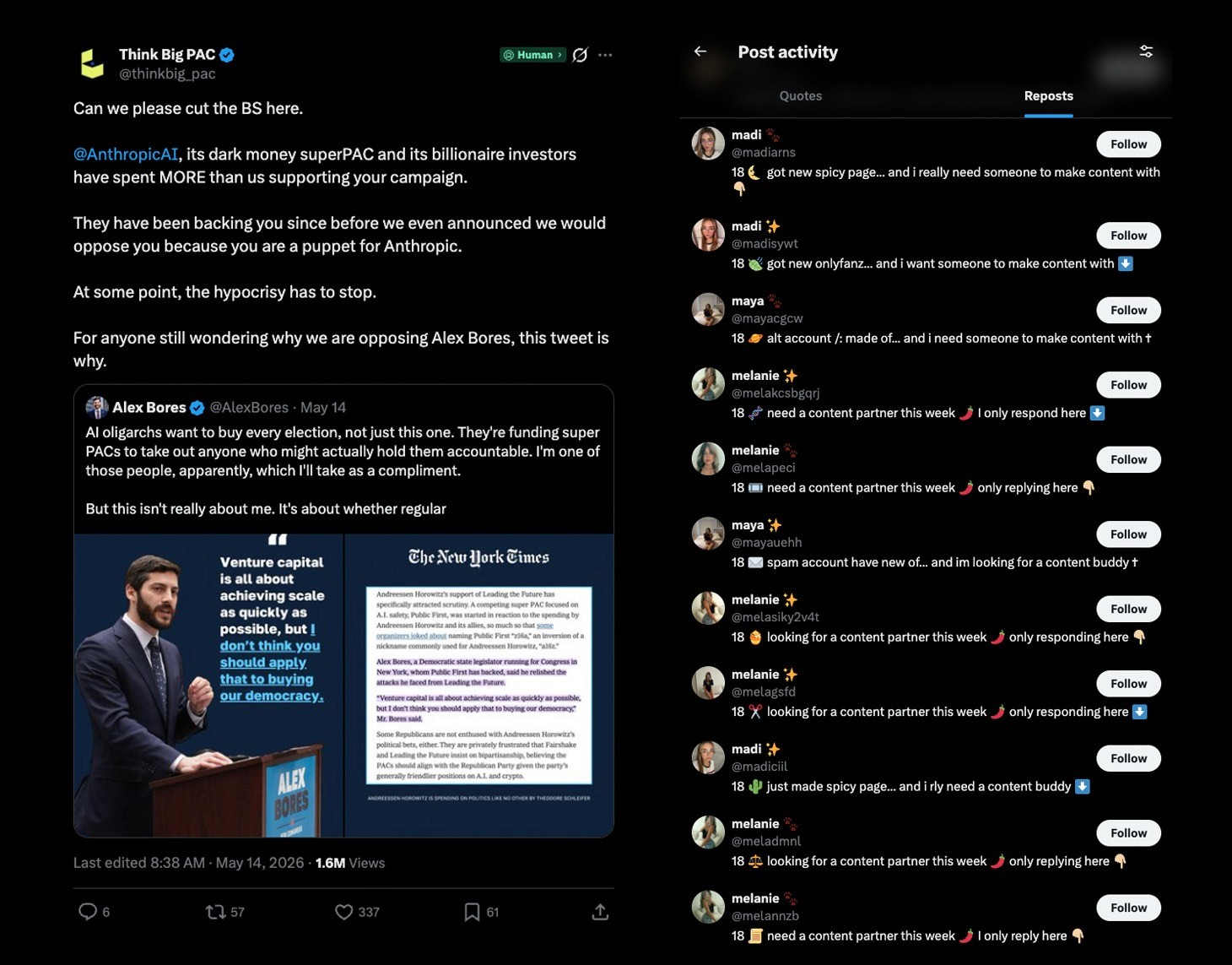
If you’ve spent time on Twitter, these accounts will be familiar to you, often showing up in DM requests and new follower notifications. When I first saw that they had reposted Think Big PAC’s post, I figured this was just random bots independently engaging with a post that Leading The Future had paid to promote, in an uncoordinated way and without any direction or funding from the PAC itself. This seemed especially likely because promoting an OnlyFans account provides sufficient justification for who is creating these accounts and why.
But then I noticed some odd patterns. The biggest one was that the accounts all had near-identical names and bios, something that I haven’t seen from other sexualized Twitter bots, which seem to have a somewhat random assortment of names, profile photos, and bios. For example, compare the list of bots that retweeted Think Big PAC’s post to the bots in The Midas Project’s new message request folder. If these bots had all independently found and chosen to engage with Leading The Future’s post, wouldn’t we see a more organic array of bot identities, as we do on other parts of the site?
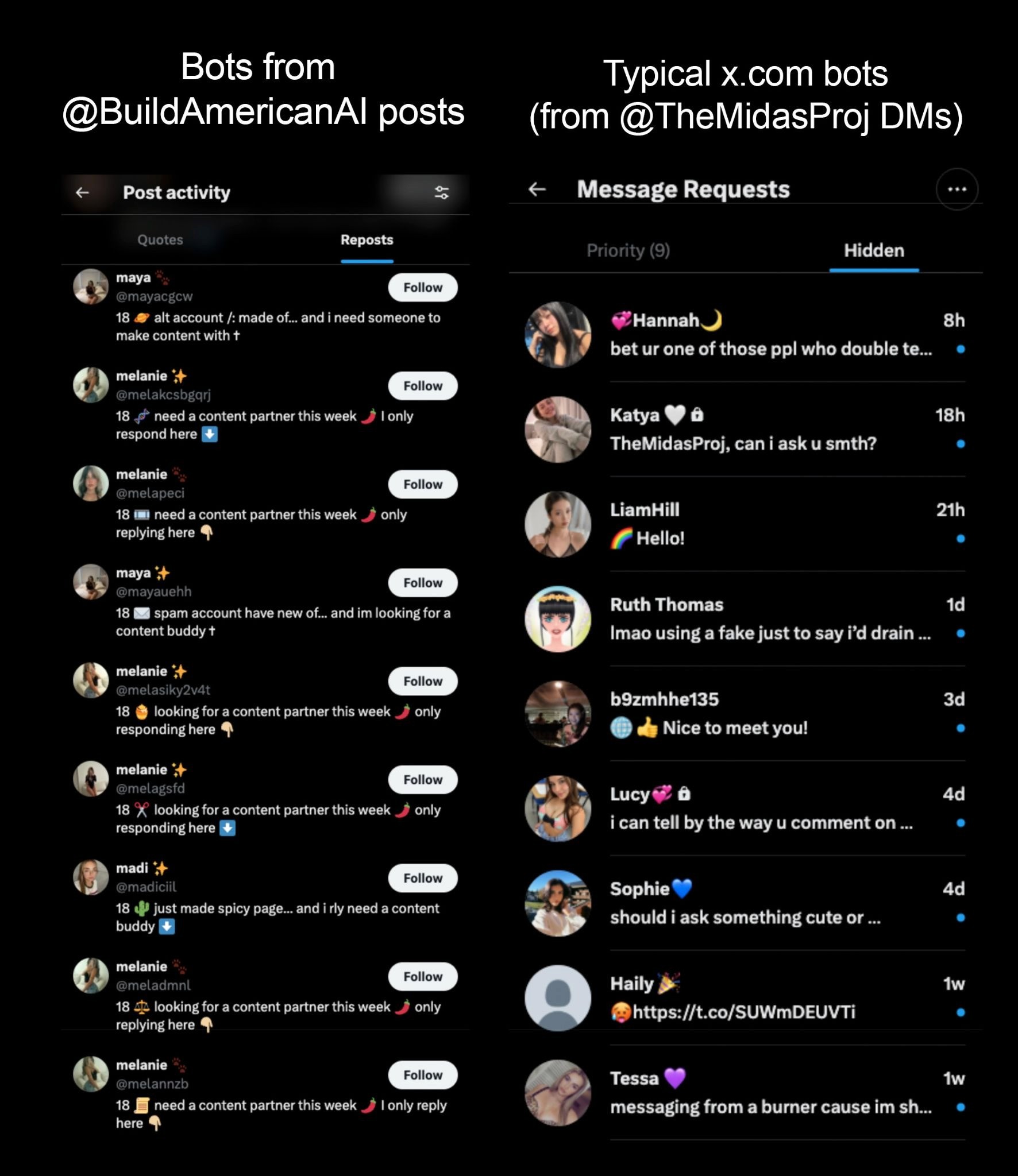
This led me to look for other similarities among the 18-year-old “M”-named bots that have reposted Leading The Future’s content. For the rest of the article, I’ll refer to these as “M-bots.”
Most of these M-bots have the exact same posting pattern (examples: A, B, C, D, E, F). They began posting frequently about a strange array of subjects just in the past week. They were often created years ago but have had sparse posting histories before the past week or so — some have no post history whatsoever, while others have content that suggests a presumably authentic past owner of the account (including selfies and region-specific content). Most of these accounts had their most recent username change in the past few months.
All of this is consistent with a bot farm that has purchased or stolen previously authentic accounts and, as of this month, has suddenly turned them into an army of near-identical 18-year-olds with near-identical bios and names starting with M.
What about the content M-bots engage with? You might expect a typical OnlyFans-promoting bot to make hundreds of posts per day, promoting their profile as widely as they can. You may also expect them to engage primarily with pornographic content or content from young men in order to single out their most promising customer demographic.
This is not what these accounts seem to be doing. Instead, most of these M-bots have posted only 10-20 times, retweeting content from a unique array of accounts weighted heavily toward political and corporate entities. To my eyes, the content they are sharing all points back to Targeted Victory, the firm at the center of Leading The Future’s advocacy operations.
Trying to identify more M-bots, I sampled the reposts of several recent viral posts on my timeline and in searches. None of the high-view-count posts I could find organically seem to exhibit this pattern of engagement — there were no M-bots in their repost list.
However, across multiple posts from Leading The Future’s 501(c)(4) affiliate, Build American AI, I have found dozens of M-bots in the list of retweets. One post in particular, an ad run by Build American AI, was reposted by over 200 of these accounts.
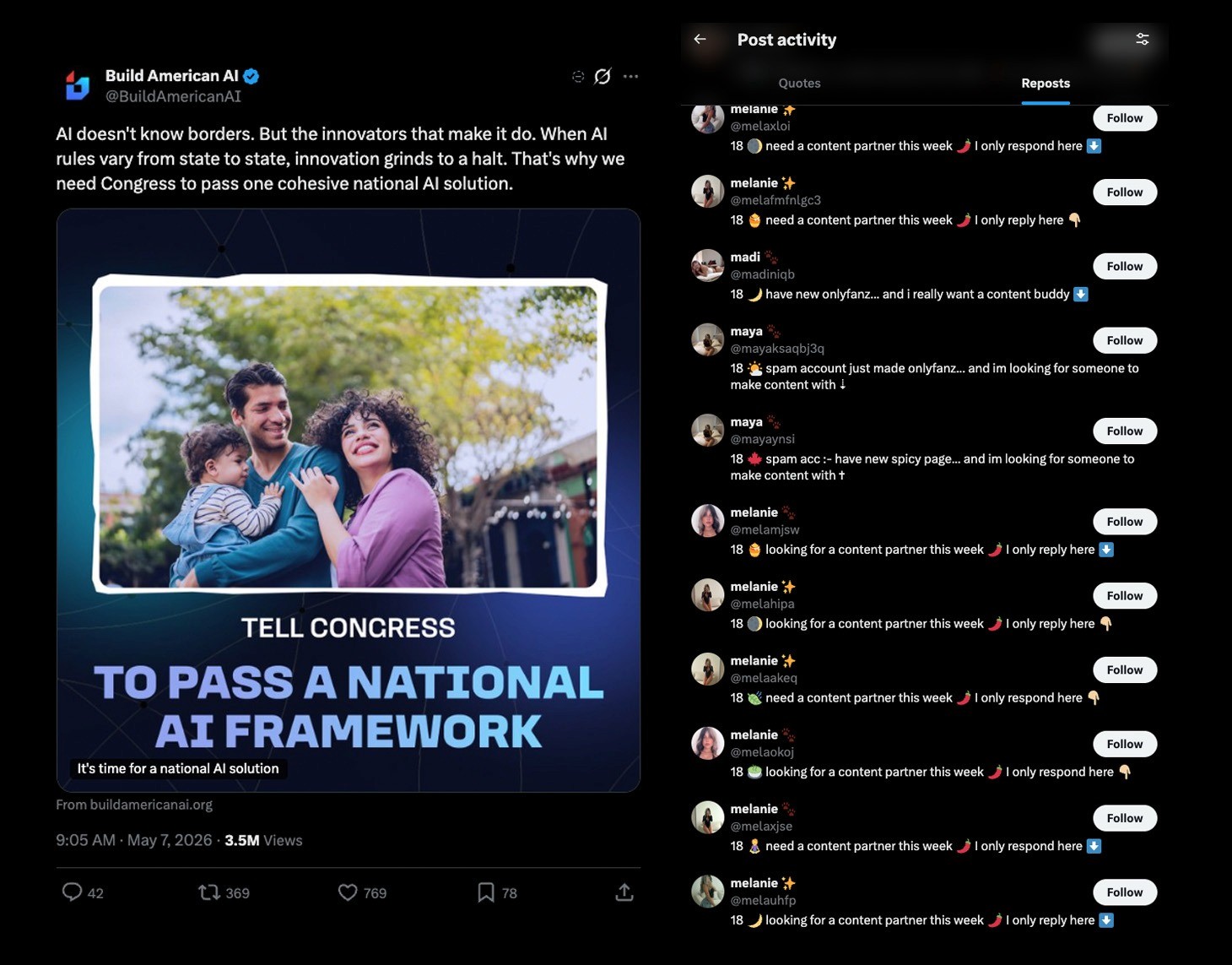
Other posts from Build American AI also have dozens of retweets from M-bots.
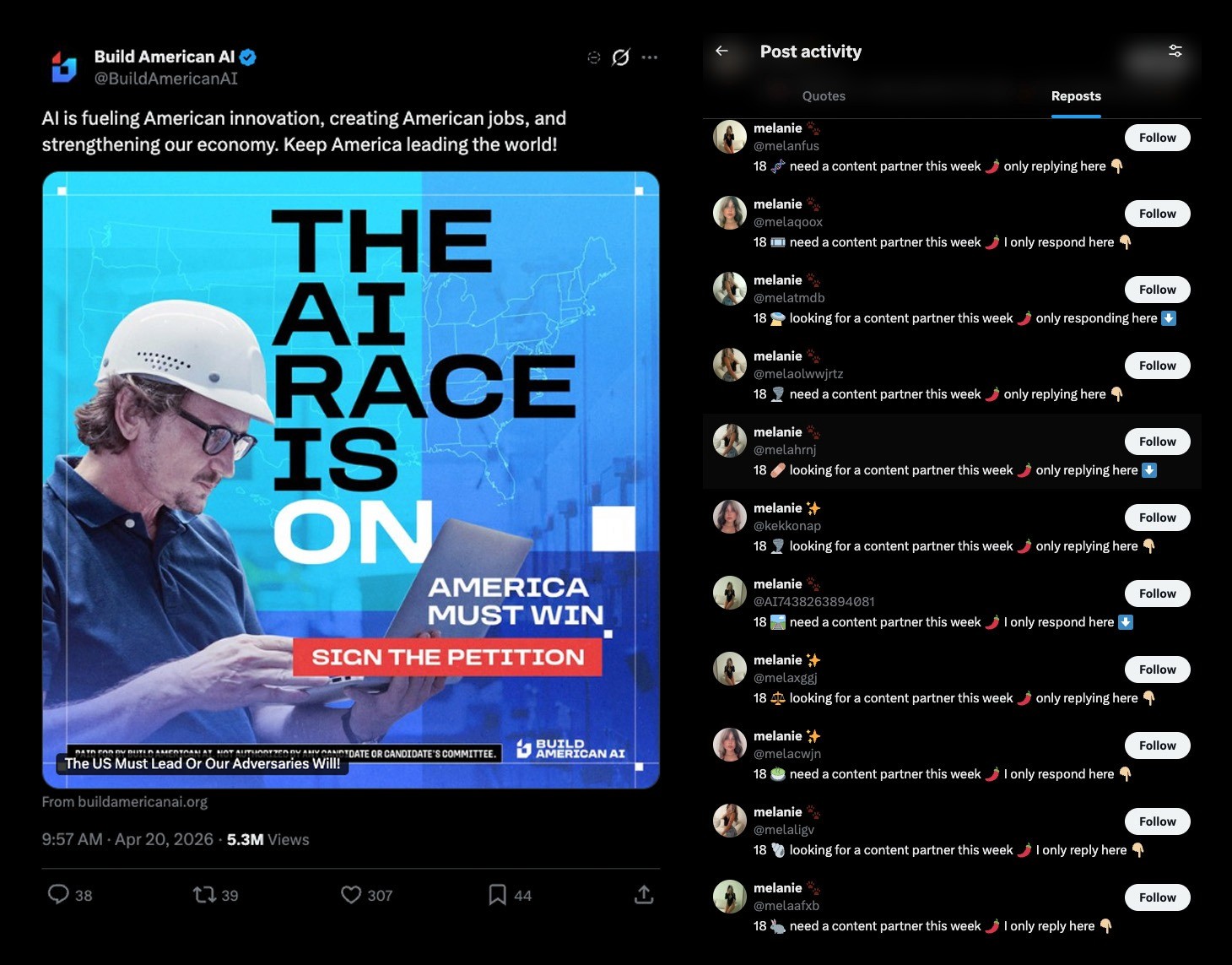
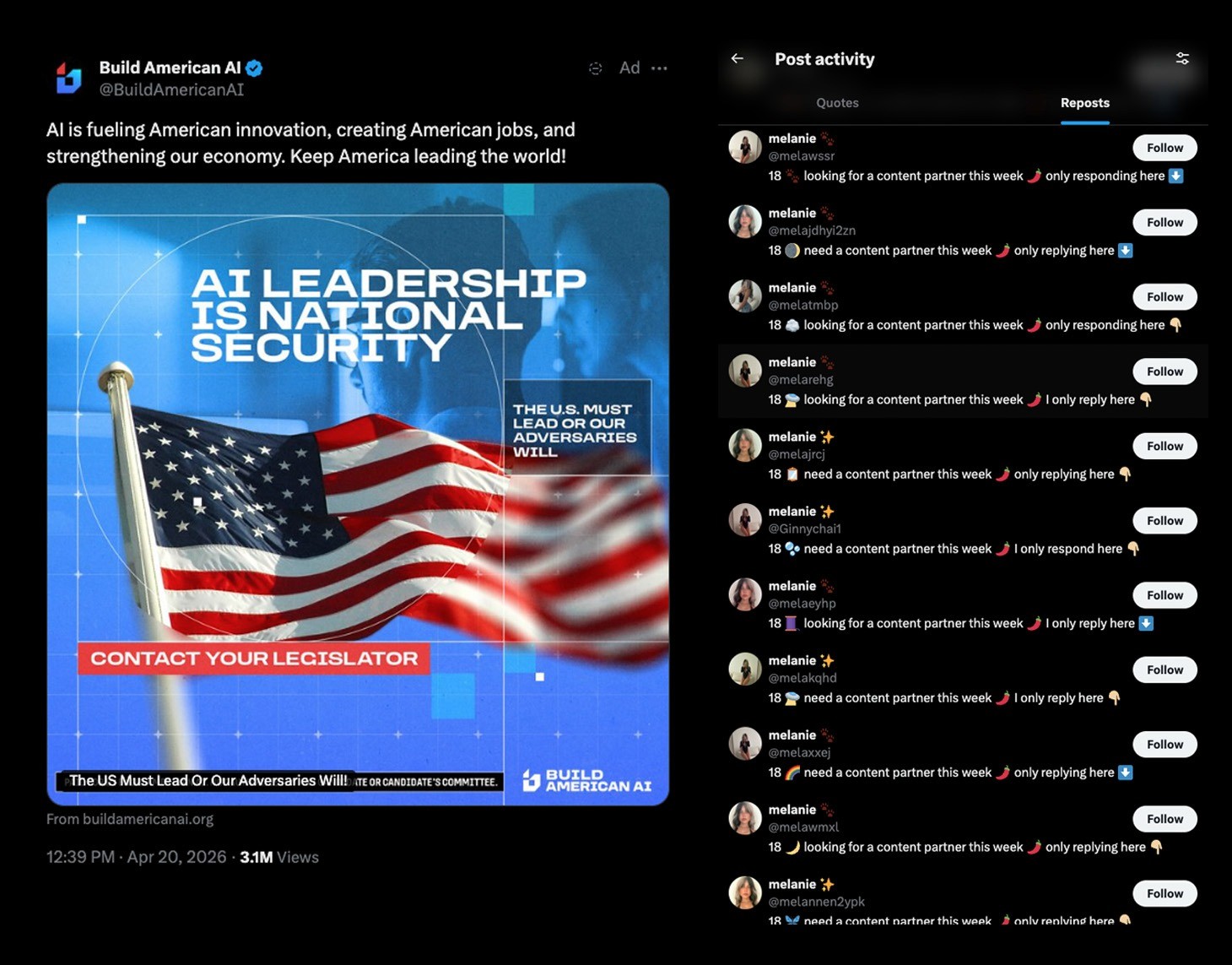
This is especially concentrated in posts that Build American AI seems to have run as ads for millions of impressions. However, M-bots also show up in the repost list of Build American AI’s organic posts, including, in one case, alongside a Targeted Victory Vice President on a post with only ~1,000 views:
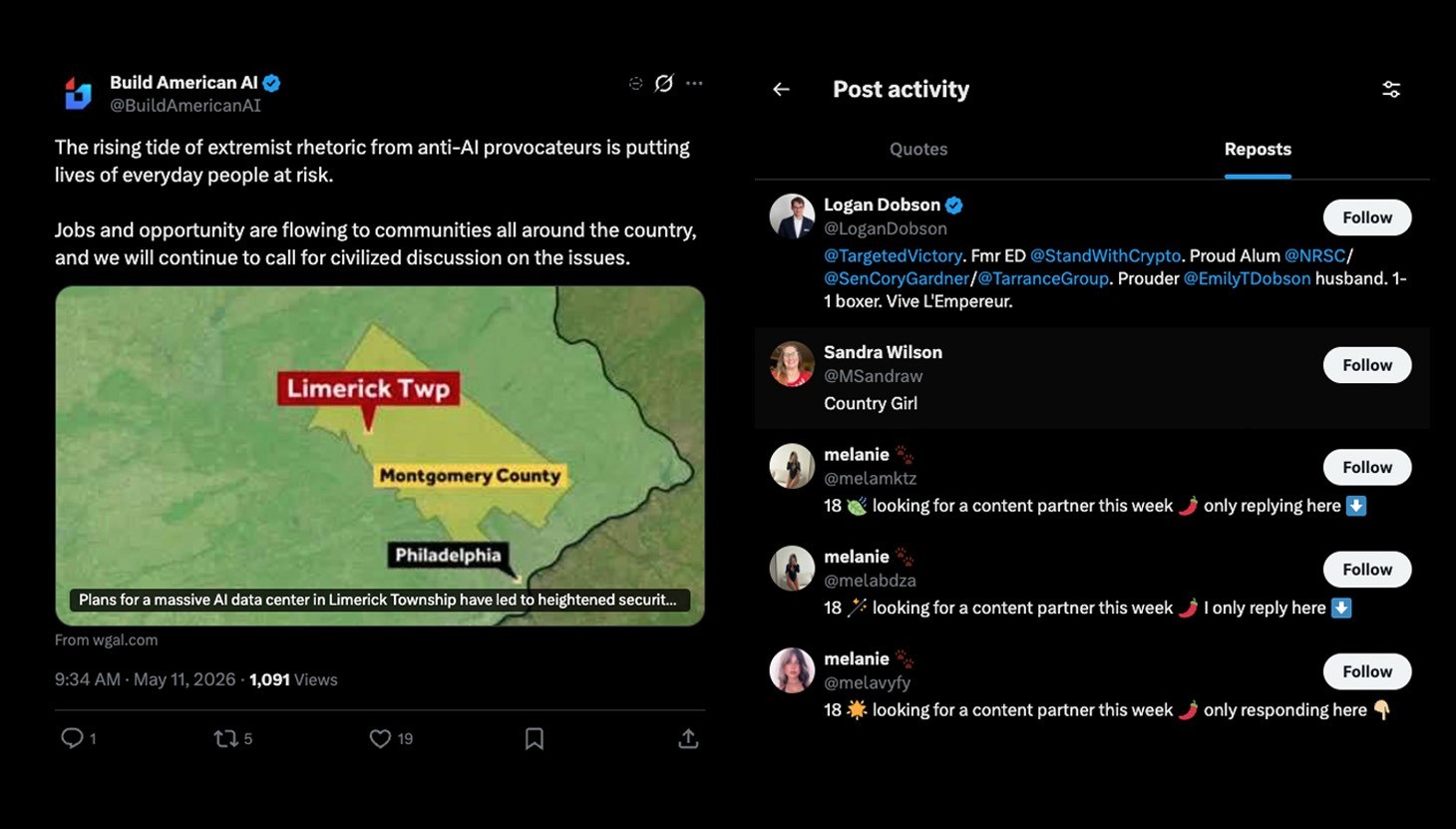
When I look through the reposted content on M-bots’ profiles, I notice some content that seems random, such as memes or videos reposted from random accounts. But I also notice a large amount of content from right-wing influencers and public figures specifically, suggesting some ideological bias toward the political right (Targeted Victory’s wheelhouse).
But the most revealing fact is that many of these M-bots have one or more reposts from political and corporate entities, which I suspect (or, in some cases, know) to be clients of Targeted Victory.
The retweets of Build American AI’s content are the obvious initial example here, given what I understand to be Targeted Victory’s central role in Build American AI’s operations. But there are others, too. For example, this M-bot, who retweeted a post from Build American AI, also retweeted a post from the relatively unpopular account for the Virginia American Revolution 250 Commission (VA250). The post from VA250 was retweeted by hundreds of other M-bots. I know that VA250 is a Targeted Victory client because if you search the LinkedIn ads database for ads funded by Targeted Victory, an ad for VA250 appears.
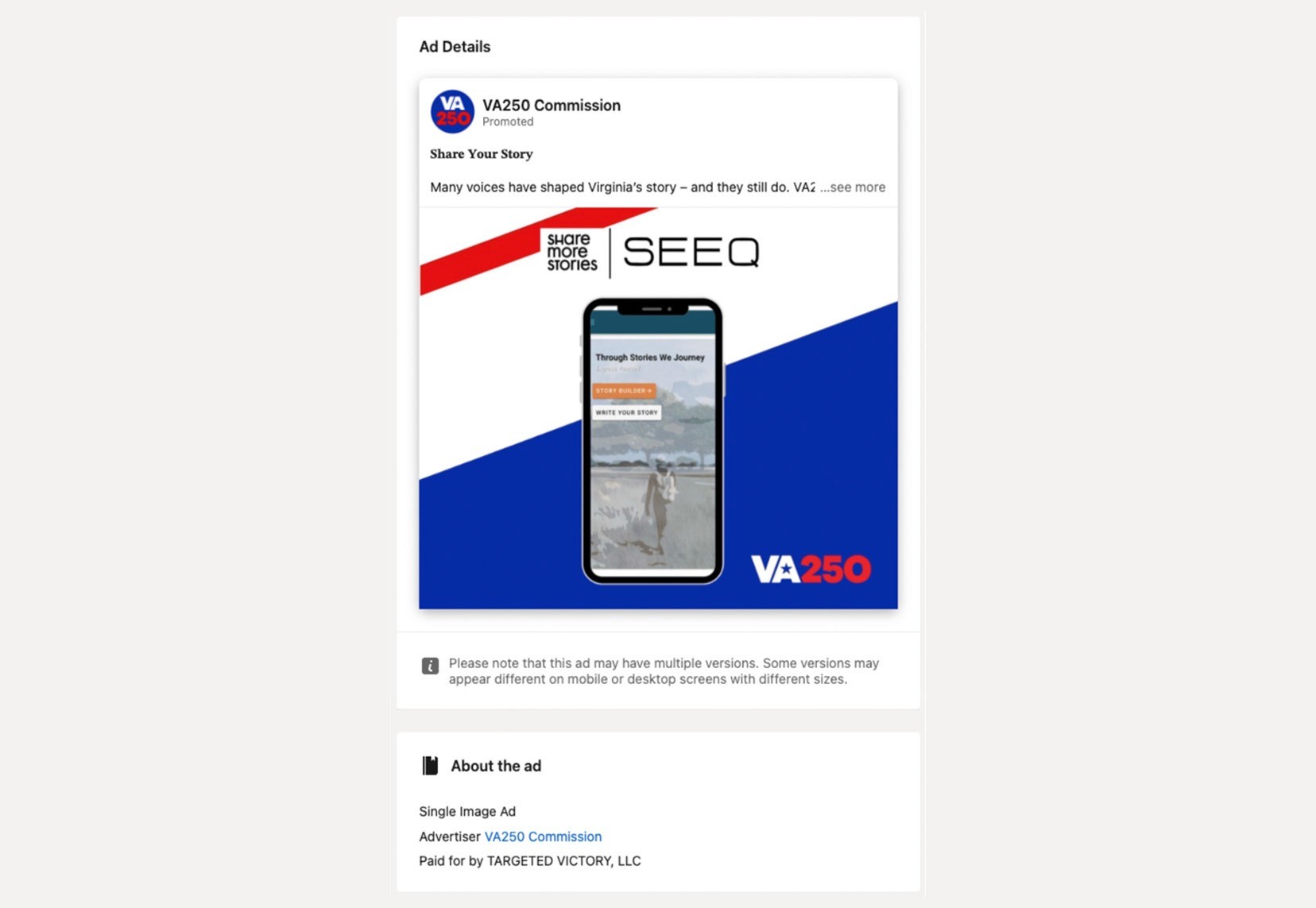
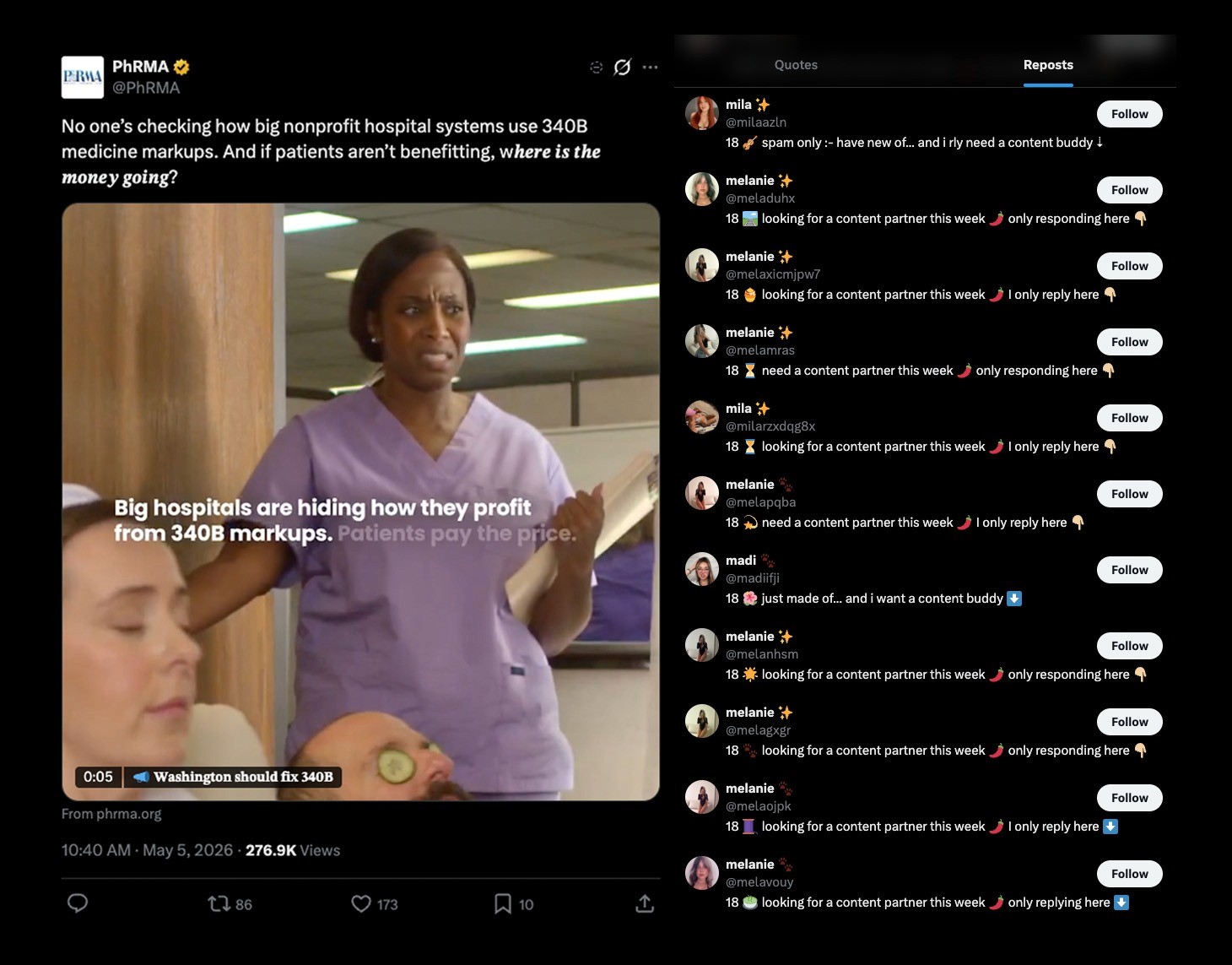
The LinkedIn ad database also shows that the pharmaceutical trade group PhRMA is another Targeted Victory client (PhRMA is also a client of Novus Public Affairs, the group linked to Targeted Victory, which I suspect ran the AI-generated news outlet AcutusWire). One post from PhRMA’s Twitter account features dozens of M-bot retweets.
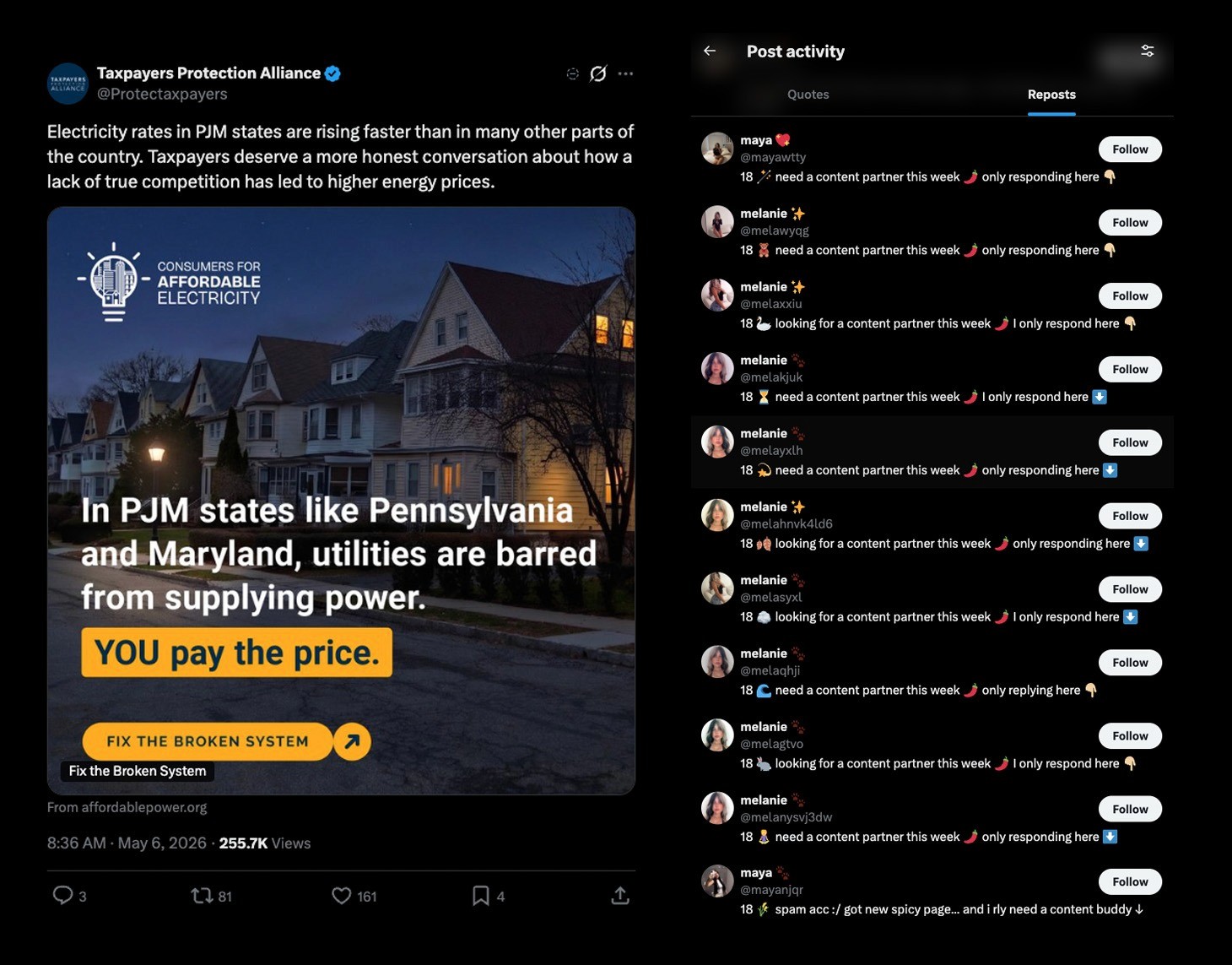
Another post with dozens of M-bot retweets is from the Taxpayers Protection Alliance. As reported by Transformer, former Targeted Victory Vice President (and Build American AI Executive Director) Nathan Leamer has been on the board of directors for Taxpayers Protection Alliance since 2020, alongside Stephen DeMaura (another former Vice President of Targeted Victory).
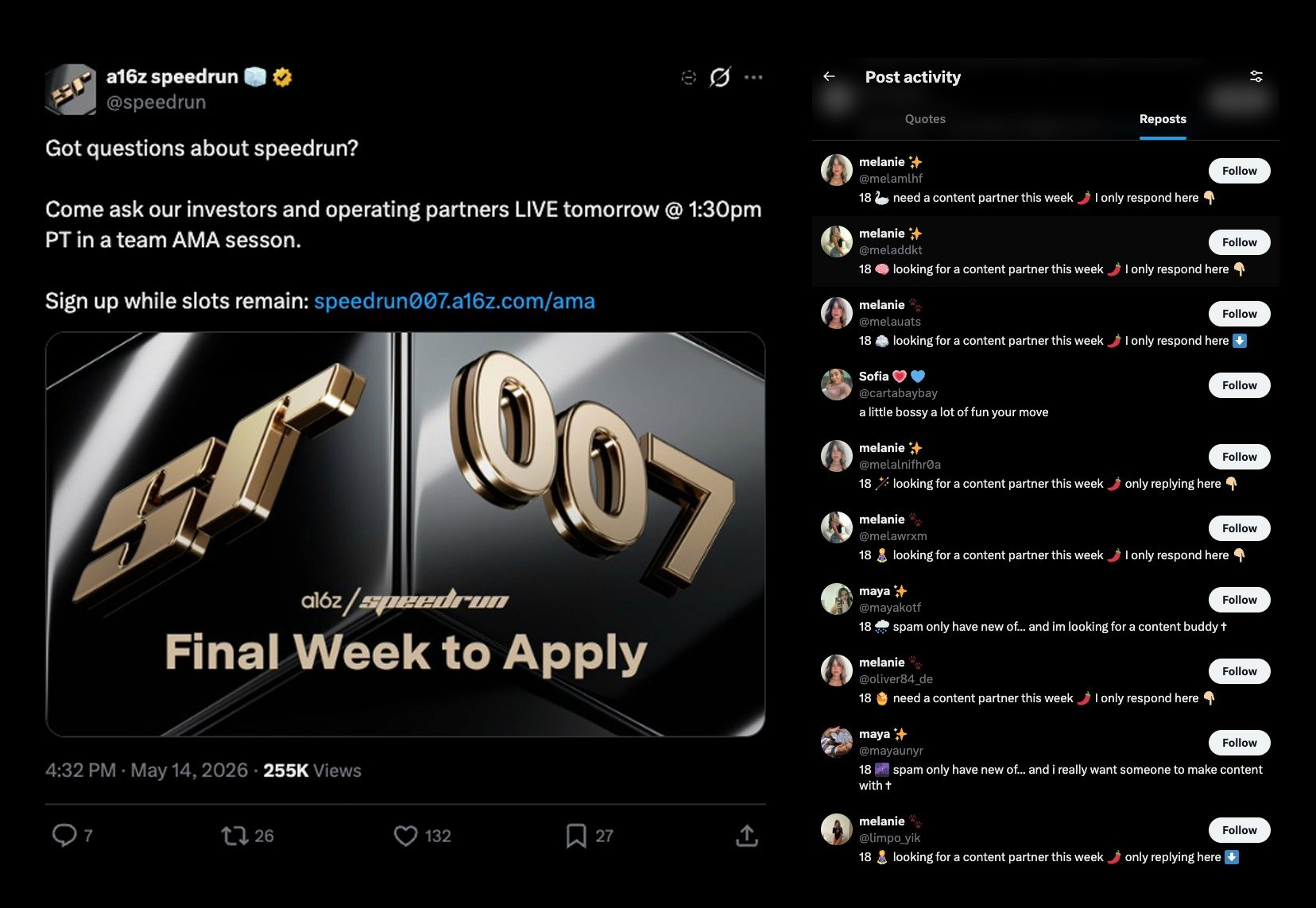
One post with M-bot engagement comes from a16z itself, the venture capital firm and OpenAI investor that has contributed nearly half of Leading The Future’s disclosed funding. Perhaps their openness to this tactic shouldn’t be surprising, given that in their Speedrun program, they’ve invested in the company Doublespeed, which proudly touts its plans to flood social media with AI-generated bots engaging in undisclosed marketing.
Other posts with significant M-bot engagement come from organizations including Financial Technology Association, American Petroleum Institute, National Electrical Manufacturers Association, National Oilseed Processors Association, Anduril, Tradeify, and Save Match Grow, all of which I suspect are Targeted Victory clients, given the nature of the retweets on their posts.
Technically, all of this would be consistent with an army of M-bots going out and engaging with posts across the site, but when I spot check other popular posts, I don’t find any. Even when I do see OnlyFans bots on the site, such as in my DM requests, they never have the specific M-bot pattern.
And speaking of OnlyFans, why are the accounts promoting this at all? Why wouldn’t they just pose as everyday users, like Doublespeed’s accounts do? I’m really not sure what the answer to this is, but my guess is that whoever is operating the accounts day-to-day (most likely a Targeted Victory vendor) is using the OnlyFans connection as a secondary revenue stream (there are strong reasons to suspect that the OnlyFans accounts in question are also fake and automatically generated).
Alternatively, this may have been done to obscure the actual purpose behind this botting. Assuming Twitter would eventually find and ban many of these accounts, the operators may have hoped that including the OnlyFans link would help pattern-match the operation to an existing, widespread spam ecosystem, thereby avoiding unnecessary attention to the specific network of political and corporate interests being served through increased engagement on key posts.
There would be good reasons to hide this. Federal election law requires disclosure of political spending, and if a super PAC is paying for coordinated amplification through inauthentic accounts, it raises the question of whether that spending has been properly reported and properly characterized. If any of these M-bots were stolen rather than purchased from their original owners — and the pre-May posting histories suggest many of them had real users at some point — that raises federal computer fraud questions on top of everything else.
X’s own policies explicitly prohibit this sort of botting to create the appearance of engagement. Under previous ownership, an operation like this one likely would have been removed. Under current ownership, enforcement has been inconsistent. Whether X chooses to act on what is, by the standards of past takedowns, a fairly visible influence campaign network will be an interesting test.
In my mind, it’s the broader implications that should concern people most, and they go beyond any one PAC. American political discourse increasingly takes place on platforms like this, where authentic civic engagement is hard to distinguish from automated influence campaigns. Ordinary users have no way to know whether a post reflects authentic opinions or is instead part of an influence campaign designed to make a fringe position look mainstream. When a super PAC’s policy positions poll badly, as Leading The Future’s do, the cheapest way to close that gap is not to change the position but to manufacture the appearance of support. The cost of that manufacturing is collapsing, and the tools for detecting it are not keeping pace.
The fact that Leading The Future is tied up in this also has a certain irony. The political operation at the center of this story exists, in part, to argue that the AI industry can be trusted to govern itself and that state-level regulation of AI is unnecessary or counterproductive. That case is being made, it appears, through exactly the kind of coordinated inauthentic influence campaign that many fear AI will make worse and more common. If a super PAC funded by a leading AI company cannot resist the temptation to flood political conversation with bots in pursuit of its own policy goals, it is not obvious why the rest of us should accept the industry’s assurances about responsible self-governance at face value.


This will hide itself!