Elon Musk is now enabling the autonomous killbots he once said should never exist
xAI’s acceptance of a controversial deal with the Pentagon marks a significant first step towards AI-powered lethal autonomous weapons and domestic mass surveillance.
Soren Messner-Zidell
·
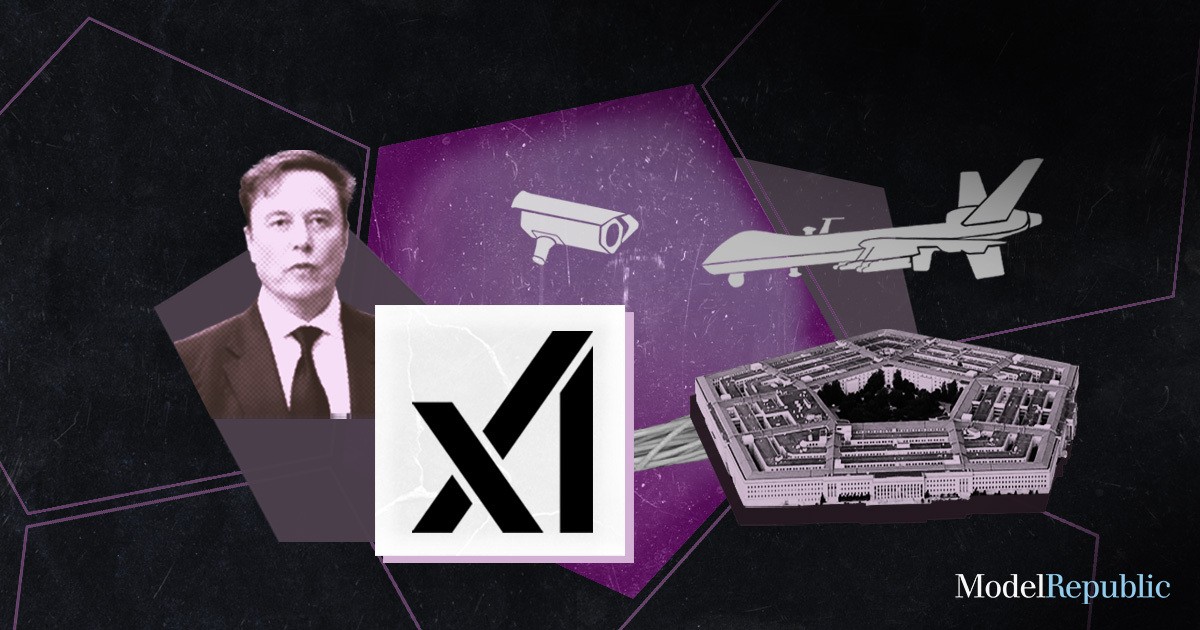
Elon Musk has a long history of making statements in support of banning lethal autonomous weapons. That record was shattered on Feb. 23, 2026, when Axios reported a story on a deal between the Department of Defense and xAI that would have seismic implications for the AI landscape: The Musk-led company had agreed to allow the Pentagon access to its most advanced model, Grok, for "all lawful purposes,” including military applications. What does this mean in principle? The Pentagon can use xAI’s Grok model for lethal autonomous weapons development and domestic mass surveillance. The Pentagon denies it, but even in their own artificial intelligence strategy, they admit they plan to develop “AI-enabled… kill chain execution.”
This coincided with parallel Pentagon talks with Google, OpenAI and Anthropic over minimal restrictions to their AI models — including for autonomous weapons and mass surveillance. Anthropic has rejected the Pentagon’s demands, saying it is unwilling to loosen restrictions on autonomous weapons and mass surveillance. OpenAI’s Sam Altman publicly backed Anthropic’s position, telling CNBC that he shares Anthropic’s “red lines.” While discussions with Google are ongoing, a contingent of Google employees rallied around a letter of opposition.
xAI, by being the first major AI company to agree to minimal restrictions on its AI model, sets a foreboding precedent — it creates leverage for the Pentagon. It puts significant pressure on the other major AI companies to accept the Pentagon’s demands, which could have far-reaching implications. But it also marks a stunning departure for Elon Musk from his previous principles, a man who was once one of the loudest voices warning about the unacceptable risks that integrating AI into the development of autonomous weapons would create.
Contrary to this week’s events, Musk has a long public track record of endorsing restrictions on autonomous weapons: Among the open letters he signed concerning the issues were a 2015 letter initiated by the Future of Life Institute, calling for a “ban on offensive autonomous weapons beyond meaningful human control.”, and another 2017 Future of Life Institute-led letter to the United Nations, declaring, “Lethal autonomous weapons threaten to become the third revolution in warfare … We do not have long to act. Once this Pandora’s box is opened, it will be hard to close.”
Musk’s record hasn’t been limited to signing on to joint statements and letters; he’s also taken past positions on government surveillance and privacy that contradict xAI’s actions today. When Musk took ownership of X, he stated in an interview that “the degree to which government agencies effectively had full access to everything that was going on on Twitter blew my mind". In a 2023 Supreme Court petition — a continuation of a 2014 lawsuit that Musk continued after acquiring X — the company argued to the Supreme Court that “history demonstrates that the surveillance of electronic communications is both a fertile ground for government abuse and a lightning-rod political topic of intense concern to the public.” When the Supreme Court declined to hear the case, Musk publicly shared his disappointment.
Musk has repeatedly shared his pro-privacy and anti-surveillance views on X: In 2022, he posted, “The world is actually vastly better than Orwell imagined, but there is also vastly more surveillance”. Just last year, in reaction to messages leaked from U.S. intelligence agencies, Musk posted, “I wonder how long this has been going on. These are individuals with the ability to spy on any Americans at will.”
A week before the xAI-Pentagon deal was reported, SpaceX and xAI entered the Pentagon's competition to build autonomous drone swarms — exactly what Musk pledged not to do. A Pentagon official confirmed that the drones will be used for offensive purposes.
All of this paints a confusing picture about what Elon Musk’s intent has been all along. What matters most is the precedent being set by xAI, allowing integration of its models into the most controversial military applications: lethal autonomous weapons and domestic mass surveillance. Fully autonomous weapons systems are still largely in an experimental stage, and it’s not entirely clear what the Pentagon intends to do with these applications. Still, it doesn’t take a lot of imagination to envision a future with a host of bleak outcomes where autonomous weapons are deployed en masse, or dystopian mass surveillance of the public is powered by sophisticated AI.
As noted earlier, even with Anthropic’s rejection of Pentagon demands, there remains a real possibility that Google will bow to Pentagon pressure and agree to allow its models to be used for these controversial military applications. With OpenAI now aligned with Anthropic’s position, and Google’s position still unclear, an emerging industry consensus appears to be forming around these safeguards, making Musk’s xAI a potential outlier. Whatever the outcome, Musk has revealed that under his leadership, xAI will choose money and power over his own principles.
Update on March 2, 2026: Hours after this article was published, OpenAI CEO Sam Altman announced that his company reached an agreement with the Department of Defense to deploy its models on classified networks. Altman said the deal includes prohibitions on domestic mass surveillance and autonomous weapons. Follow-up reporting indicates this almost certainly isn’t the whole case; OpenAI seems to have agreed to ‘all lawful purposes’, which allows the Pentagon to use OpenAI’s models for domestic mass surveillance and autonomous weapons within the boundaries of the law.


This will hide itself!